
Memory in place

Somedays, life is hectic and I lose the thread of what I’m writing. These past two weeks have been that, so I’m holding back the next part of ‘Bicycle’, letting it find its way through the tangled mess that is my mind after two weeks of changing addresses. In the mean time, a musing on memory. Is it anchored to place or is place built from memory?
My memories exist here, and they travel with me everywhere. Never disposed upon a new landscape, always attached to their old locations. But, their influence on me is inevitably influencing the new memories I’m making, my experience and understanding of this new place, which is gradually becoming an old place, laden with memories that are firmly placed in this topography.
Will these memories linger in this location as much as these places linger in me? Do memories create the place, do they change it, or is it just the physical imprints I leave that do that? The house, the garden, my footprints compacting the earth, my words written on a page.
If memories linger in places long after their makers leave, how long do they last? As long as the physical imprint? Rock art from thousands of years ago, when seen again, create an idea of a world long past. If I soften my eyes and look across the Douro river outside of Porto, I can hear the laughter, fights and music of friends coming together for the annual celebration. Fires crackle and die as the last voice becomes a snore. The next morning, as breakfast is made, and children are nursed, rocks are etched with herds of animals, long headed people, and cross-hatched landscapes. Or maybe, the rock art was carved by a solitary person, someone moving between tribes, rejected by all, held at arms length, or honoured. Knowing it is there changes how I see the location, but, is that memory in the earth, or is it one I impose because I see something human enough to relate to?
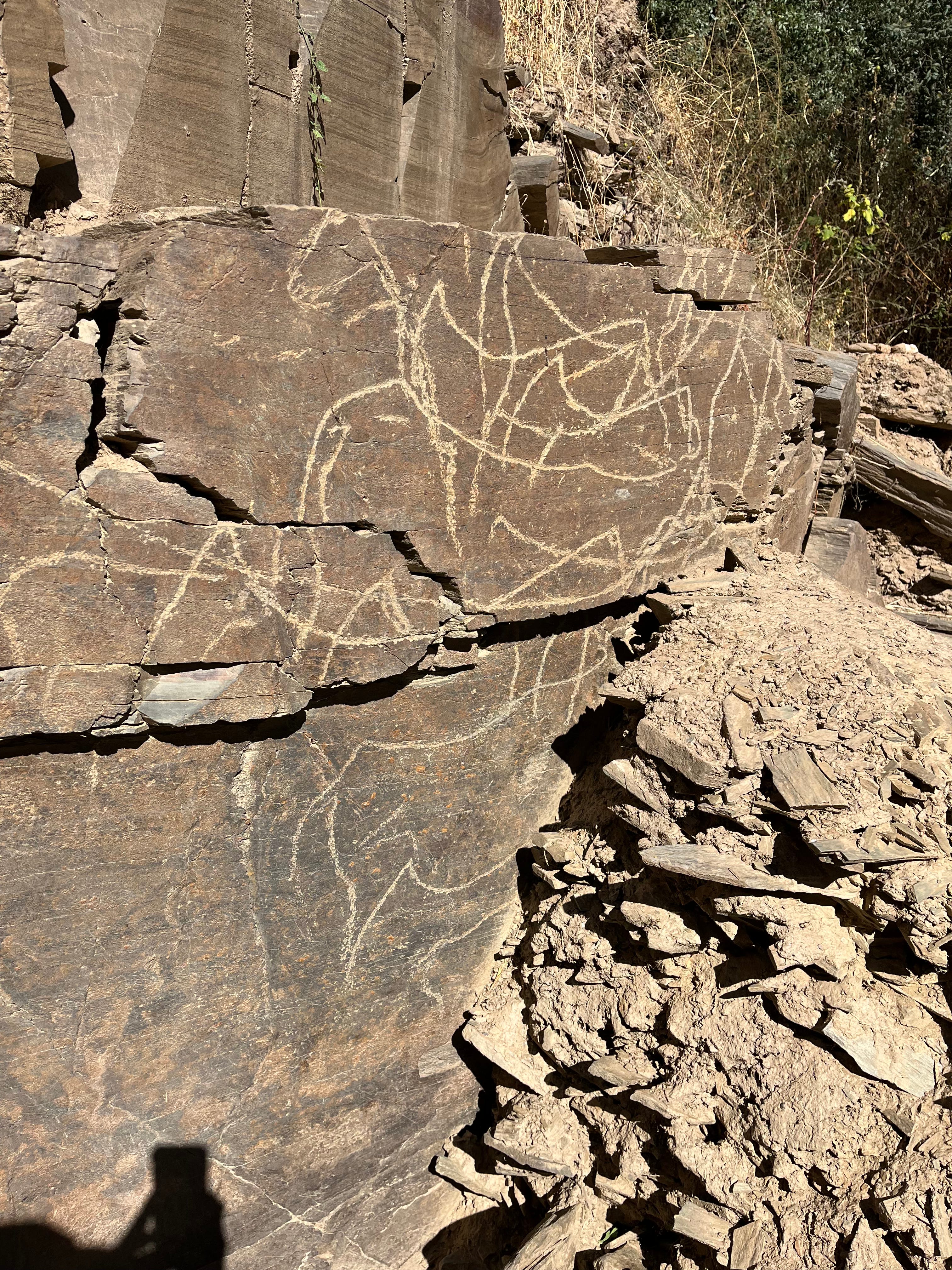
The feeling of the place changes again when I discover how hard local communities, and then the country, fought to stop a dam being built that would drown these rock images. Hide them underwater until they were erased from all but memory. And then, finally, erased even from that.
Things can just as easily be forgotten as they can be remembered. As civilisations, we learn incredible skills over decades, and lose them overnight. Iceland was populated by Vikings, skilled at building, farming, fishing, fighting. But, three hundred years later they were living in dark turf huts, burning peat, the log houses long gone. The memory of better things lost to volcanic eruptions, changing beliefs, changing habits, changing environments. We can track the history, we can see where it changes, we can not see the detail, only the rough brush strokes of why things happened.
The memories that imprint the earth are not solid. Like rock art covered in water, or swept by wind, the definition fades. And eventually it is gone. Yet, I value it still. The things I have forgotten that surprise me when a friend remembers instead. The small flashes that remain as bright as if I experienced them an hour ago, not four decades past.
Memory is never ending, in that we constantly add to it, forget, rewrite old. We treasure it and lose it, mourning the details because the faint shape remains, we pass the shapes on to our children, leaving them with behaviours they don’t quite understand. Our memories shape how we see a place, and in that way affect the location. If I have memories of love and laughter had on a river bank, I’m more likely to protect that river, than if in that place I lost a leg or trust in the world. If I choose to block my memories, or act only on my emotional memory I am more likely to take actions without considering the place itself.
I exist here, as do my memories; carved and erased with unequal effort, they shape my decisions and actions. This place helps me remember what I never saw by holding the imprints of earlier footprints. It reminds me how easy it is to forget. Yet, this location exists without me, even if a memory of me lingers long after I’ve left.