
Bicycles
the start of a story

His name was Roberto Russo and he rode a bicycle for work. If you asked the right person, she would come up with some elaborate story for why he rode a bike that would be completely unrelated to his employment. His wife for example would brush over any mention of the bicycle. Only after she had exhausted every other avenue and the person asking kept pushing, would she acknowledge its existence. Regardless of her denials the fact remained that everyday Robert Russo put on a uniform and rode a bicycle for work. And Robert, at least, was happy to tell you as much.
It wasn’t his bicycle. This was a singular regret of Robert’s. The gold frame, the two 28 inch wheels, the front and back shock absorbers and the disc brakes were all owned by the company who employed him. He tried to reconcile this disappointment with the knowledge that when the company felt his current bicycle was obsolete or no longer a good representation of the company image, it was replaced. However, as this was something Robert would not have done if it was his own bicycle, every replacement felt more of a loss than a reward. In fact, at each of the past three upgrades, Robert had, knowing the change was coming, spent hours polishing and oiling, and re-blacking the wheels, in an attempt to demonstrate his current bicycle was good for another few years. His efforts never worked. And even worse, no matter how many hints he dropped, the company never offered to give him the old bike for his own personal use. As this was the only disappointment Robert had with his job, he put his sadness in a box and locked it away, in the hope it would disappear over time.
Rebe Russo refused to admit the circumstances of her husband’s line of travel. But she did relish the stomach, thighs and buttocks the constant cycling awarded him. She suspected her husband would not have willingly kept his figure after thirty otherwise. The uniform he wore was also quite smart in her eyes, hugging him in all the correct sections and making her grin with pride when women and men in their twenties looked Robert up and down as he walked down the street. Rebe was shallow that way. But she was by no means shallow in every way, in fact at times she was generosity embodied.
At the company parties, Rebe was always front and center to make the day a success for everyone. Not trusting the catering or administration team who organized the event. Rebe made sure to have something on offer that met every dietary requirement, and was labelled appropriately. When Robert had first started in the job, Rebe had made a concerted effort to play the good wife and invite the boss for regular dinners. It hadn’t worked out in the way the ‘How to be a good wife’ manual suggested it would. At the end of every dinner Rebe was surprised to be left with a feeling or rage, rather than one of satisfaction that had been suggested by the writers. Maybe women were different in the 1950s, she just couldn’t be sure.
Robert’s boss at the company always had to hold down a shudder at the bi-annual company picnics and the annual Christmas party when Rebe arrived and swayed her bony hips and overstuffed sweaters towards Charlin, some cake or pie balanced on one hand, so she could smooth the other suggestively down her waist. A pie! Rebe was a walking cliché of a woman. And it annoyed Charlin in the same way a splinter in the eye would. In truth, if Charlin could have got it past HR, she would have fired Robert a year after he’d joined the company, just so she wouldn’t have to see Rebe again. The sad thing was Robert was an exceptional employee, he was constantly getting funding and Charlin couldn’t convince HR or the Board any different.
It had taken two years before Charlin extricated herself from the Russo dinner invitations. They were a trauma. Rebe would pepper the conversation with compliments about her husband and how his untapped potential would shine through if he had a work vehicle with four wheels and an engine. These hints grew more obvious and demanding as the meal went on, until dessert was slammed down in a rage, causing a fine spray to shower onto Charlin’s trousers. The stain of berry compote never really came out. Robert would just roll his eyes and remind his wife he liked his bicycle. Rebe would plaster a smile over her sulking face, and Charlin would try to swallow her dessert as fast as possible to get out of there. It was hard for Charlin to put her finger on exactly why she found Rebe so frustrating. She probably shouldn’t have slept with her, but you never know how that will go until you do it, so it wasn’t a regret.
Charlin was not against the idea of Robert having a car, but it was impractical for a company built around environmental principles, that’s whole purpose is to teach other businesses how to transition and even benefit by shifting car fleets to bicycle fleets — cost saving, employee health benefits, more available floor space with car parks unnecessary. Robert could see the impracticality of him having a car, but not Rebe. Who, at every meeting, reminded Charlin, that Charlin herself had a company car. Rebe may have had a point, but Charlin refused to acknowledge it. Her own shinning silver curving beast of a car had a principled purpose. How would it look for the CEO of a company to arrive sweaty, with helmet hair, and a bike lock looped over her neck, for a meeting with politicians or investors? Who’d sign agreements for environmental funding or be convinced that focus on environmental issues was a solid election campaign decision, if the person who was doing the convincing was wearing Lycra and had ghost marks on her face from an air filter had sat so she wouldn’t poison herself with noxious car fumes on the ride.
An electric vehicle would be ideal, but if the energy is being supplied by coal power plants wouldn’t that just be hiding the body in the chest and relying on people not wanting to see the blood seeping out from the bottom? These were the complex business decisions Charlin found herself bogged down with these days. She often dreamed of simpler times when the general public was happy hiding their heads in the sand, and no one felt the need to pull them out into the light.
Robert Russo had issues with Charlin’s thinking. In his own subtle way, he was trying to change it. He had, for instance, had a lot of success getting government funding because he showed up to meetings on his bicycle. He’d beaten the Lycra issue by having a pair of business trousers with a butt pad built in specially made. He quite liked how they made his arse look a lot more defined that it was. He’d left scientific papers, and less rigorously quantified wellness articles about the benefits of cycling on personal health on her desk, only to find them folded into origami animals and put in suggestive positions around the office building. Though Robert frowned outwardly at these creative endeavours, he’d had to admit, to himself, that the three rhinos in the main lobby had been remarkable.
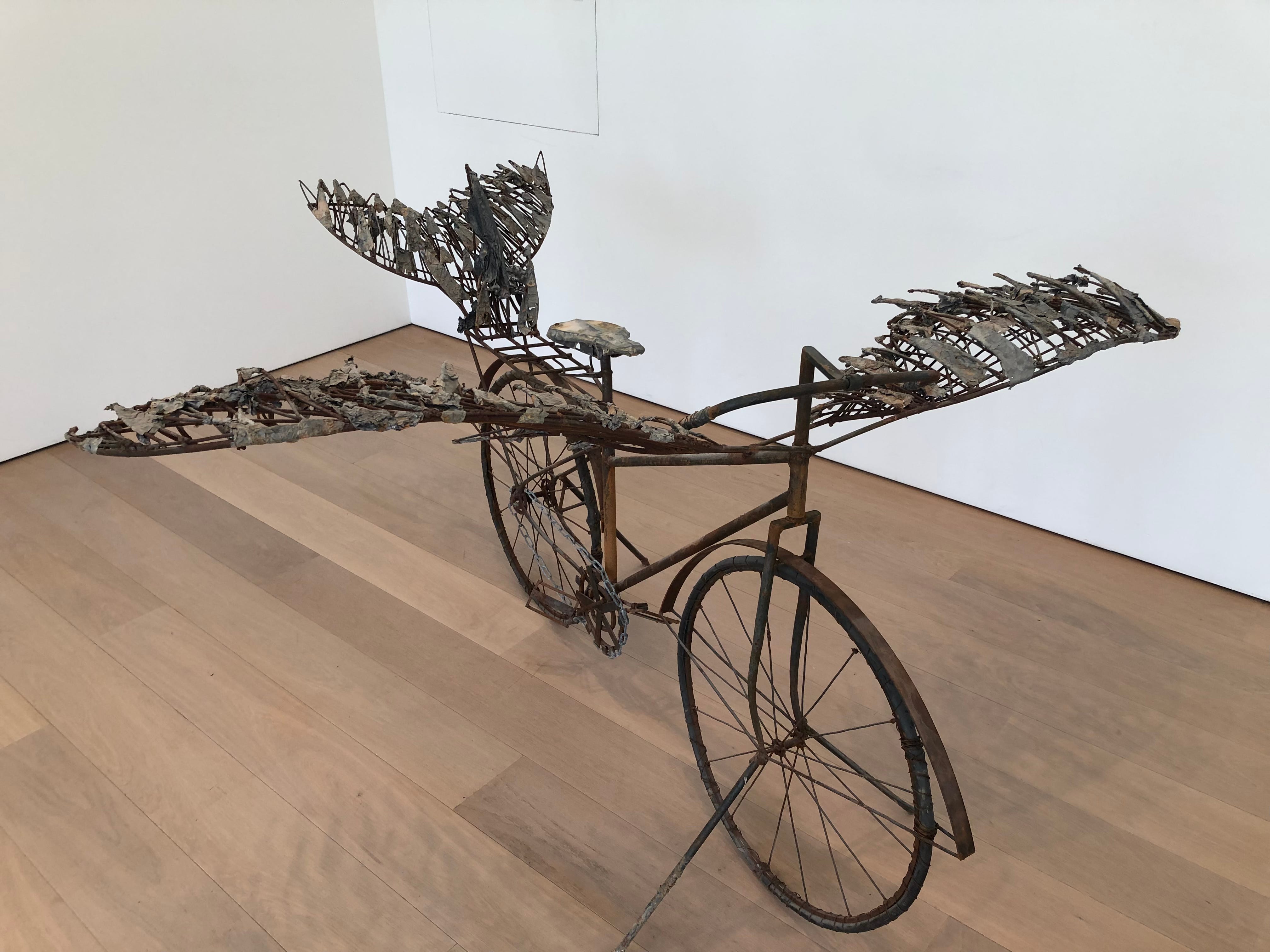
To be continued….